

1863 - 1912
The History section is currently being written. If you have a contribution you would like to make please e-mail it to admin@crescentgarden.co.uk
Click on the link below to see a map of Little Venice as it looked in 1863!
And the link here will take you to a fascinating history of the building of Maida Vale, from the British History Online website
The 1918 Bombing of the gardens
The great Air Raid of 1918 - By Julian Futter
Visit of King and Queen
I am going to try and piece together what happened on the night of March 7 and 8 1918 when the bombers of squadron RF501 bombed our part of London. Following on from what we know of the Blitz some of this is going to sound very familiar. Civilians endured the black out, sheltered in tube stations and died in their houses. All the paraphernalia of air raid defence was already in place – anti aircraft fire, searchlights, balloon barrage and night fighters. There were even Royal visits. Although only 51 airship raids and 52 aircraft raids took place, of which 12 airship and 19 aircraft raids occurred on London, a total of 9,000 bombs were dropped with a total weight of 230 tons. Total casualties were 1,413 dead and 3,400 injured of which 670 died and 1,962 were injured in London. To put this into some sort of perspective, in one week in October 1918, 2,225 people died in London from the great Spanish flu epidemic, and on the battlefields an average of 5,600 soldiers died on every day of the war. On the first day of the battle of the Somme 20,000 British soldiers died. In the Second World War 30,000 civilians died in the bombing – 50 times as many as in 1914-18.
However the impact of air raids on civilians had effects far out of proportion to the damage they caused. I will touch on what these effects were at the conclusion of my article.
To begin with, what was the situation like in March 1918? The war was now 3½ years old. On the Western Front both sides were weary and worn out. The Americans had been in action for less than a month and had by this stage made no impact at all. On the Eastern Front the Germans had entered Kiev on March 2nd and were less than 90 miles from St Petersburg. The next day the Bolsheviks surrendered, giving up vast amounts of equipment and arms to the Germans, and allowing Germany to turn her full military might on the west without having to fight on 2 fronts. The Allies were now exhausted and as General Haig said were “fighting with their backs to the wall.”
In the first week of March Austria bombed Venice and 3 other Italian cities. Germany dropped 90 bombs on Paris sending 200,000 Parisians to the countryside and the next day bombed Naples. 2 days after the raid the Germans launched their final great offensive. The only good news we had was in Palestine where under Allenby, the war was going well against the Turks.
I would now like to describe the events of the night of the 7th and 8th of March from the viewpoints of some of the participants. At 10.00 p.m. in London, the crowds were leaving some of the 40 theatres where they had seen among others, George Robey, Mrs Patrick Campbell, the Beecham opera, Gladys Cooper, Beatrice Lilly, Edith Evans. Jack Buchanan was playing at the Criterion which advertised itself as being “built entirely underground” .
As Londoners made their way to their tubes and buses, over in Belgium squadron RFA 501 was making final preparations to take off from their new base in Scheldewindeke near Ghent. They had only occupied it that afternoon and without time to settle in to their new quarters they were ordered to attack London that night. Heavily laden, the squadron had loaded up and made their final preparations. One of their number, R39, piloted by Hpt Richard von Bentivegni, was carrying a one ton bomb – only the second time such a payload had been carried – the other 5 carried a mix of 100 and 300 kg bombs.
Their planes were of the most advanced type. Known as Giants they were the brain children of Count von Zeppelin of airship fame and Robert Bosch the industrialist. They were designed and built in the Berlin suburb of Staaken and had been in action since 1917. These aircraft were powered by four 245 hp engines travelling at 80 mph and flying at 14,000 ft with an endurance of up to 10 hrs. Their wing span was 138 ft, greater than that of the Lancaster bomber. Their laden weight was 12 tons, approaching that of a Wellington. They were at the cutting edge of 1917 technology and had an enclosed cabin, electrically heated flying suits, extensive instrumentation and wireless telegraphy. They were well armed and carried a crew of 7 or 8 airmen.
At the same time at Rochford and at Stow Maries airfields, and at 8 other airfields, mechanics had prepared the BE12s, SE5As and Camel fighters for operations as part of the new defence system for London. It had been 3 weeks since the last raid and with the weather overcast and no moon or stars visible no action was expected that night.
At RFA 501 morale was high. In previous operations against England not a single Giant had been lost to enemy action and results had been good. R39 whose future we will follow in detail later, had dropped a one ton bomb with devastating effect 7 weeks earlier in Long Acre, destroying Odhams Press and killing 38 people. It’s Captain Hauptman Richard von Bentvegni had commanded the squadron since they left the Eastern front in November 1916 and had already flown 5 missions against England and France.
Let one of their number, Hptm Schoeller, tell the story of the preparations for take off on that March night. “Our 6 aircraft are rolled out onto the T shaped concrete apron and parked in preparation for take off. We have been ordered to ready the machines for a night attack and for this task the R plane crew which consists of 2 pilots, one observer, one navigator, 2 mechanics, one fuel attendant, one wireless operator and one machine gunner is assisted by a ground crew of 40 men. The highest ranking officer on board is the R plane commander who also acts as first pilot and navigator. Under the commanders supervision every crew member bends to his assigned task. The wireless operator tests his equipment for readiness to receive and send messages: the fuel attendant sees that his ten 245 litre fuel tanks are properly filled and topped, the mechanics who are situated between the two engines in the nacelles tune the engines and prepare them for the start and the machine gunner arms the 4 m/c guns. A good deal of time elapses before we are ready to accept our bomb load. The bombs, which may range from 100 to 1000 kgs and are released electrically are hung in long rectangular bomb bays underneath the fuselage floor between the wings and are enclosed with folding doors. On top of these preparations there is just time for a frugal supper and dissemination of orders. A last comprehensive study of charts and orientation material with my observer and second pilot then out to the armed aircraft whose idling engines sing a song of subdued power. At exactly 20.00 Hptm Richard von Bentivegni fires his starting flare and their planes strain forward with an ear deafening roar. We taxi to the take-off strip and with full throttle head into the clear dark night. Slowly the heavily laden machine rolls over the ground, finally it is airborne and after a wide curve around the aerodrome we head in a direction along the pin marked course on our maps. Inside the fuselage the pale glow of dimmed lights outlines the chart table, the wireless equipment and the instrument panel, on which the compass and other navigational instruments are mounted to help guide us through the darkness. Before long we spot the signal cannon at Ostend which fires star shells into the night to assist us on our way.”
At 10.00 in 56 Warrington Crescent, 10 year old Miss Stevenson had gone to bed with her new gym slip by her bed side, hardly able to wait to wake up and wear it for the first time. She never would.At the same time, across the road at no 61, Lena Ford, Ivor Novello’s collaborator on the popular hit of the day “Keep the home fires burning” had been working on the lyrics of some new songs and just put them on a pile beside her bed.
In nearby St. Johns Wood, on leave from service in Palestine, Lt¬ Colonel Woolaston was finishing dinner in his hotel opposite Lords and talking to his friends about the campaign, and also about how he would be interested in observing the effects of an air raid at first hand.
By 10.30 the Germans had been picked up by coastal defences and the Royal Flying Corps had been alerted. Captains Stroud and Kynoch took off on their last missions. With them were 40 other pilots from 10 squadrons including one from Biggin Hill – to become more famous 22 years later. By 11.00 the Deal battery had spotted the raiders. One had already turned back due to engine trouble, but the remaining 5 were now well on their way to London. At 11.05 the first of nearly 10,000 shells sent up that night was fired at their formation.
To give an idea of what it was like to fly to their target at 12,000 feet we will return to Hptm Schoeller in R 27. “We approach the coast; the night is so dark that the coastline below is but a mere suggestion. Under us is a black abyss, no waves are seen, no lights of surface vessels flicker as we head for the Thames estuary at Margate. On our right in the distant North is our only light, the weak pulsating glow of the Aurora Borealis. Ahead of us a black nothingness. Are we on the correct course? We have neither a weather report from the high seas (he means a report radioed back to base by a submarine operating in the channel) nor wind measurements to go by. We had started in clear sky but now clouds streak below us. We can see nothing through the holes, which now and then appear, but from our elapsed time we must be over England. The flight continues without a sighting. Did we miss the coast?
Suddenly a breath of relief. Directly ahead, the searchlights illuminate the sky in their search for us but they do not spot us. Now we are certainly over England- but where? Because all surface lights are blacked out it appears we soaring over a dead land. But the enemy has heard us and therefore we are free to request wireless bearings. The operator sends a pre arranged signal, which is received by 2 stations in Belgium. In a few minutes we receive a message giving our location. Accompanied by searchlights, which seem to guide our way we fly towards the Thames whose dock installations are our target. Can we recognise the docks through the low overcast, across the darkened countryside? (it seems he spends most of his time wondering where he is!) Directly ahead the landing lights of an English airfield flare up as the enemy prepares to intercept us. The machine gunners arm their guns and fire at the searchlights below. All at once, through a hole in the cloud cover the grey band of the Thames momentarily appears. We continue on course, and during the next sighting Oberleutnant Kamps who is standing next to the bomb release mechanism in the open bow of the machine, presses the bomb release keys. (Bearing in mind that they probably did not a clue where they were, one wonders what Oberleutnant Kamps had sighted). Not far ahead we can see a portion of the balloon barrage. We turn for home along the Thames, whose banks are dotted with anti aircraft batteries that soon have us under fire. As we approach the coast the overcast becomes thinner and before long the searchlights catch us and the bursts of anti aircraft move dangerously closer. Shell splinters tears through our upper wing without causing any damage. The flaming shells come so close we can almost touch them. Beneath us we spot the exhaust flames of a pursuing night fighter but it does not threaten us. In this manner we reach the open sea at Margate and steer for Ostend where well known signals will guide us home. “
What, in the meantime, was happening on the ground?
By 11.00 the air raid warning had gone off in the form of a “maroon” which was an airborne explosion whose crack called people to their shelters, if any. R 39 was now only 55 mins from its victims, some of whom were busy playing cards and possibly even discussing the recent spreading revolt in Croatia; perhaps they even debated whether the death of Parnell’s friend John Redmond in Wexford would, in the words of John Dillon,” bury for ever the discords which have been the curse of Ireland for over a century.”.
But this is mere speculation:
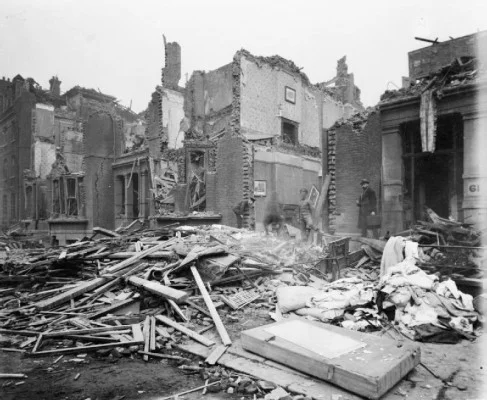
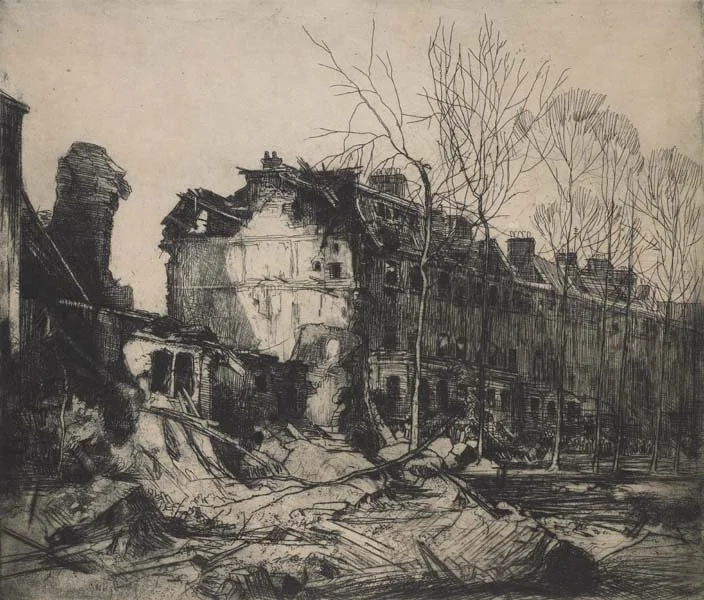
What is not speculation is that at 11.55 precisely, R39 dropped a one ton bomb onto the dividing wall of 63 and 65 Warrington Crescent. It exploded on impact and demolished 61, 63, 65 and 67. The houses were well built brick buildings 4 stories high and in all cases the upper two stories were demolished. In the case of 63 and 65 the masonry was blown sideways onto no 61 and 67 and the lower stories of these houses collapsed under the extra weight of the masonry, which then fell into the basement. The great concussion caused by this bomb blew out windows up to 150 yds away even knocking down partition walls and incidentally blowing out the stained glass windows in Clifton Gardens of which only one was ever replaced. Miss Stevenson opposite at no 56 Warrington Crescent was awoken from her sleep. “It was the most terrible noise imaginable and it felt as if all the house was falling to pieces. I looked out of the window and saw a mass of flames, the houses across the road having caught fire. I heard the awful cries for help above the roar and crackle of the flames and the noise of the falling masonry.”
Frank Small, the Vicar and a Special Constable, on duty at Warwick Avenue tube station, saw the bomb fall and ran up the road hearing shrieks and screams.
Mrs Coxall, a servant remembered, “I was in the basement and heard a crash and my door came in. I put the door on the bed and crawled underneath it. I heard the house falling and dragged 94 year old Mrs Brown under the bed with me. Then the whole place collapsed, and to my surprise, I was able to crawl out without a scratch. I got Mrs Brown out and after a visit to hospital she went to her friends. Another maid was blown to the top of the house and when rescued she was found to have only a broken ankle.”
The card players meanwhile escaped with slight cuts after their windows were blown in.
In another house a clergyman and his wife had just got out of bed when the earth moved for them and their ceiling fell in. According to newspaper reports several people had narrow escapes from falling chandeliers.
5 minutes after the bomb fell at Warrington Crescent Lt -Col Woolaston achieved his ambition to observe an air raid at first hand. Standing at his window, a bomb exploded in the street opposite, killing him instantly.
By now the rescue services had begun to swing into action.
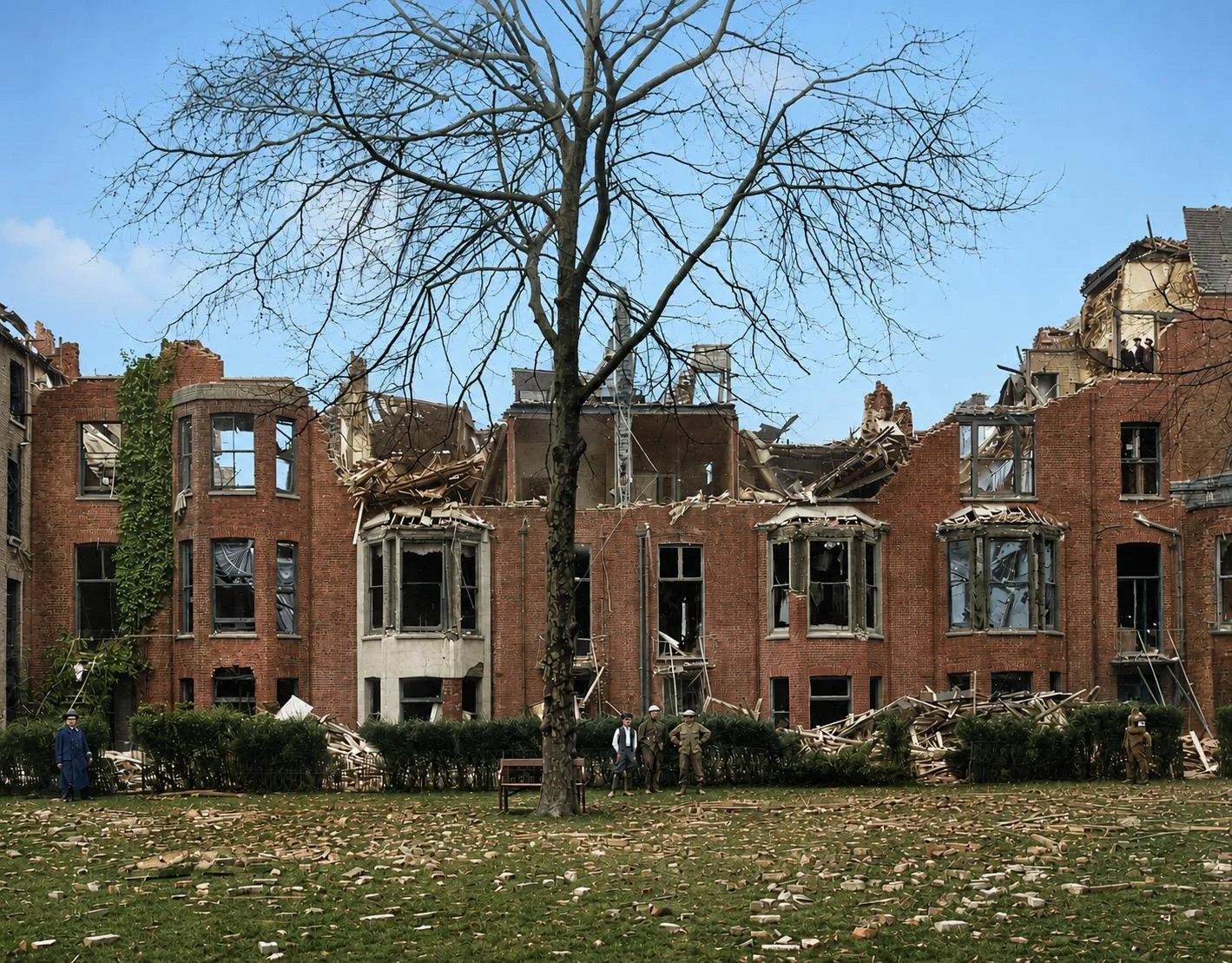
The 1918 Bomb Damage from the garden side, colourised
Charles Conroy, who received an MBE for his work that dreadful night, arrived on the scene soon after the bomb went off and left us this report. “There was a young girl high up in a shattered house hanging on a beam by her hands who was rescued by the police. At about 1.00 we heard the voice of a man who had been buried in the debris with his children who were dead. Through out the night we were trying to cheer him up by saying we would soon get him out. We managed to rescue him alive at about 10.00 but he died later in St. Mary’s.”
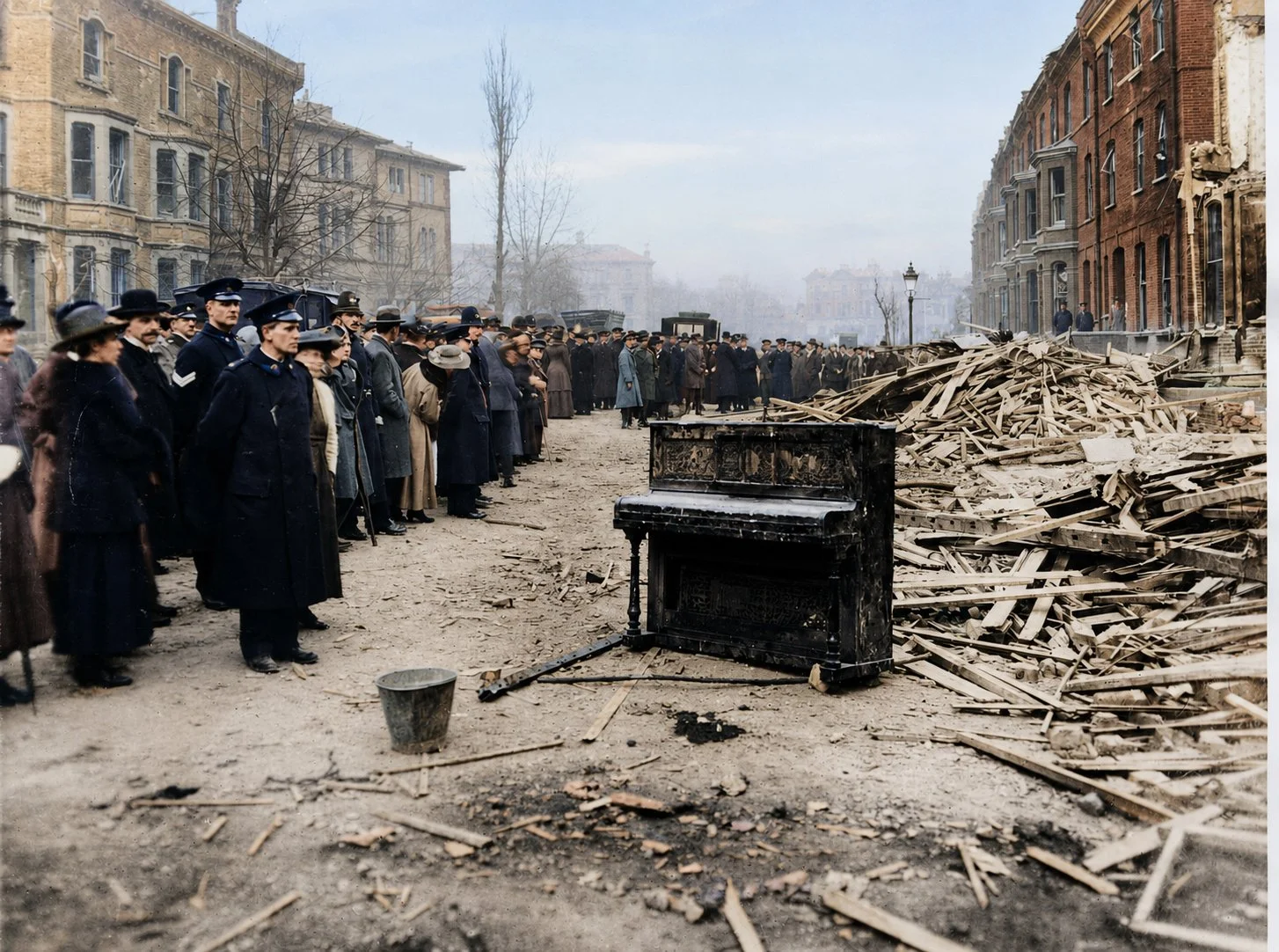
This was Mr Thomas whose entire family died. There was also an Irish girl who was pinned down by a sideboard and the words “Oh Begorrah” were the only complaint we got from her. Another man fell from the top of a house enveloped in a carpet, which undoubtedly saved him from more serious injury. Furniture fell on him and he was pinned by the legs of the piano you can see in the photo. Restoratives were given to him until he was rescued.
Mrs Ford was not so lucky. Beside her shattered body were the lyrics for a song called, ironically, “God guard me”. Her crippled son’s body was lying nearby. Rescue work continued throughout the night and the next day. It was dangerous and unpleasant. Dr Wright, who lived nearby, spent 12 hrs inside the precarious structure administering oxygen and brandy to Mrs Pyke, who died later, and her sister Mrs Rothschild who survived. Though injured and bleeding he would not leave until the women were brought out. Their mother, Mrs Lindo, had been killed instantly when the building fell on her. The scene is described by Sapper Landryan who worked with him all night tunnelling beneath 15 tons of debris at enormous risk. “I had seen towns and villages in Flanders shelled to pieces but none presented such a scene of desolation as this. Bodies shattered almost beyond recognition were buried wholly or in part beneath the fallen masonry.”
In the air, by now R39 had escaped unscathed over the coast. Not a single contact had been made with enemy fighters. Captains Stroud and Kynoch were searching the overcast skies for the bombers but in the darkness they collided over Rayleigh and became the only air casualties that night.
One German bomber, R27, which we followed earlier, crash landed after its fuel lines froze. Two British fighters crash landed but without any injuries. On Friday 8 march Field Marshall viscount French, Queen Alexandra and Princess Victoria visited the site and on Saturday 9 march at 3.00 p.m. King George and Queen Mary visited Warrington Crescent and St. Johns Wood and then went on to Chelsea to see the damage done to the Royal Hospital by a bomb dropped, unknown to her, by R39, 3 weeks earlier.
In her diary Queen Mary writes that she saw the “awful havoc” done to the “poor houses” in Maida Vale. Speaking during her visit to Miss Coxall, the maid who hid under the bed, she said it was “terrible, terrible” and congratulated her on her narrow escape. Bodies were still being removed at this time and King George spoke to Dr White and other rescue workers.
This was followed with a visit by the then Minister for Munitions, Winston Churchill, who had just come back from a trip to France.
Quite why this raid got so much attention I don’t know. 15 other raids caused more casualties. In one raid in June 1917 162 people died, so why so many high powered people came remains a mystery.
The crew of R39 survived the War to fly missions in 1919 to the short-lived Republic of Ukraine where it was shot down on a mission carrying counterfeit bank notes
Hpt Richard von Bentivegni survived to write his memoirs.
The amount of men and materials involved in dealing with, what was in retrospect, a relatively minor annoyance in the scale of the war was out of all proportion to the actual threat. 250 guns, 350 searchlights and 8 squadrons with about 150 aircraft of the most modern type were employed to deal with this threat. Approximately 17,000 men were employed in air defence duties many of whom, especially trained pilots, were desperately needed in France.
Production of desperately needed munitions was severely disrupted by air raid warnings.
In conclusion it is sobering to remember that all this happened only 9 years after Bleriot made the first faltering trip across the channel and only 15 years after the Wright Brothers staggered into the air for the first time at Kitty Hawk.
Sources:
Air Defence of Britain A Charlton 1938
Air Defence Ashmore 1929
The German Giants Haddow and Grosz 1970
Fire over England Castle 1982
The German air raids on Britain Morris 1925
The Air Defence of Britain Cole and Cheesman 1984
Encyclopaedia Britannica 12th Edition
Colindale Newspaper Library
The Public Records Office Kew Air 1 2123 etc
The Imperial War Museum
The Aviation Picture Library
Windsor Royal Archive
City of Westminster Archive
© Julian Futter 1996
Dial M for Murder
Alfred Hitchcock’s great movie, Dial M For Murder, based on a play by Frederick Knott, was set in a flat that had the fictional address of 61A Charrington Gardens, Maida Vale (hence the ‘M’ that one dials). The street is a long curved street of elegant terraces, and the protagonist Tony Wendice gives directions ‘turn left at Maida Vale underground station, we’re about two minutes walk’. It’s also apparent in the movie that the flat backs onto a private communal garden with a gate at the bottom.
To test my theory that Charrington Gardens is in fact intended to be Warrington Crescent, I consulted Ken Mogg, one of the leading experts on Alfred Hitchcock who runs a site called ‘The MacGuffin‘ dedicated to scholarship on the work of Hitchcock. Below is his response.
“You don’t say whether you have consulted reference books on this, notably Gary Giblin’s ‘Hitchcock’s London’ (2006) and Steven Jacobs’s ‘The Wrong House: The Architecture of Alfred Hitchcock’ (2007).
Unfortunately, in Giblin’s words: ‘Precisely where in London the exteriors [for the Wendices' flat in DIAL M] were shot remains a mystery (although production notes do confirm that the footage was shot in London).’
Giblin elaborates:
‘According to the address he gives Swann in both the play and the film Dial M for Murder, Tony Wendice and his wife live at 61A Charrington Gardens, Maida Vale, a two-minute walk from the Underground, presumably the Maida Vale Station but possibly the Warwick Avenue Station. There is no such street as Charrington Gardens in Maida Vale, nor was there in 1954, although there is a Warrington Crescent, which may have been what playwright Frederick Knott had in mind. (Indeed, his screenplay indicates that the locale is near Maida Vale Road [sic], which also suggests Warrington Crescent.) Hitchcock apparently intended to film exteriors of the couple’s home (for POV shots out the bedroom window, for Mark’s view from the taxi, etc.) on location in Randolph Crescent, which is in fact one street over from Warrington Crescent. However, as the visitor to Randolph Crescent will quickly perceive, the street does not match the one shown in the film.’ (pp. 94-95)
And a footnote in Jacobs adds this: ‘A letter (May 13, 1953) in the Warner Bros. Archives contains a “list of Leica Kodachrome shots of possible locations.” However, the addresses mentioned in the document (17 Randolph Avenue, 2 Carlton Avenue, 104 and 106 Sutherland Avenue, and 70 and 72 Hamilton Terrace) do not match the shots used in the film.’ (n. 1, p. 104)
Tony, all I can think of to add is this. When Hitchcock was shooting on location in London for THE MAN WHO KNEW TOO MUCH (1956), he shot the exteriors of the ‘Ambrose Chapel’, supposedly located at 17 Ambrose Street, Bayswater (the address shown in a telephone directory and repeated in the dialogue), not in Bayswater at all but at the St. Saviour’s Church Hall, Brixton. (Sorry, I’m not sure how far from Bayswater that is.) My point (and Gary Giblin’s) is that Hitchcock and his scenarist had no interest in any real street – not in any pedantic or literal sense, that is. So long as it looked and felt right for the locale mentioned in the film, it would do. So maybe you should just stroll around your area in ever-widening circles (!), and hope that you will suddenly stumble on the street that represented the fictitious Charrington Gardens! Of course, 58 years have passed, so there may have been changes …”.
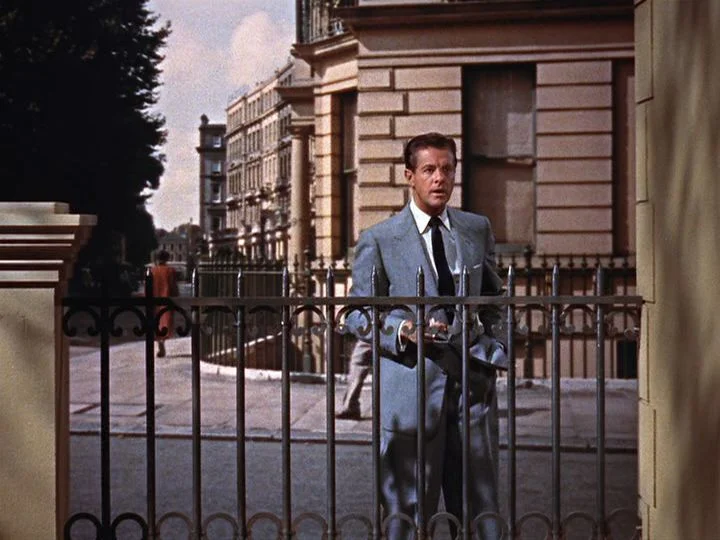
Ken was also kind enough to send me some screen grabs of the exterior shots used in the film, which I reprint below. They really don’t seem to be from around here, and look to me to be either one of the streets on the perimeter of Regents Park, or possibly somewhere around Belgrave Square. If anyone has any good ideas please mail them to me at admin@crescentgarden.co.uk. Both Ken and I would be grateful.
Post-Script: Julian Futter has pointed me to a wonderful website call ReelStreets that has the answer. It has been identified as Collingham Road in SW5 with Cromwell Road in the distance. If you got to ReelStreets they have a comparitive photo of Collingham Road today. The other photo was taken on the Warner Brothers backlot in Los Angeles.


Virginia de Vaal

Virginia de Vaal, a major force in the transformation of the communal gardens of Little Venice, passed away on May 21, 2020 shortly after her 95th birthday. Born in San Francisco in 1924, she came to London in 1948. Later she spent some years in The Netherlands but came back to London in 1970, to Randolph Crescent. Very soon she set about refurbishing the neglected Triangle Garden on the tiny budget provided by the Church Commissioners, at that time the landlords of the whole estate. In 1989 she moved across the street and immediately became involved with Crescent Garden, just as the Commissioners were handing over control of the amenity companies and their communal gardens to the residents. Crescent was redesigned and since then her care and persistence helped make it the superb prize-winning garden it is today. Always a great enthusiast for the arts, she assisted Sylvia Rhys-Thomas in the creation in 2003 of the Little Venice Music Festival, now in its 17th year. She will be sadly missed by all who knew her but her memory will live on, with us every day in the gardens she so loved.
The Vale Motor Company - Behind the Warrington!
By Julian Futter

Standing outside St. Joseph's school and looking towards the Warrington Hotel public house it is difficult to imagine a time when there was a sports vehicle factory where Europa house now stands.
In 1859, as part of the licence application for the Warrington pub, there was provision for extensive stabling with accommodation for 24 families. Seventy years later that space had become available for rent and was redeveloped as the site of the Maida Vale Motor Company.
The company was established in 1935 by an aristocrat and his two partners and was a classic gentlemen's hobby venture.
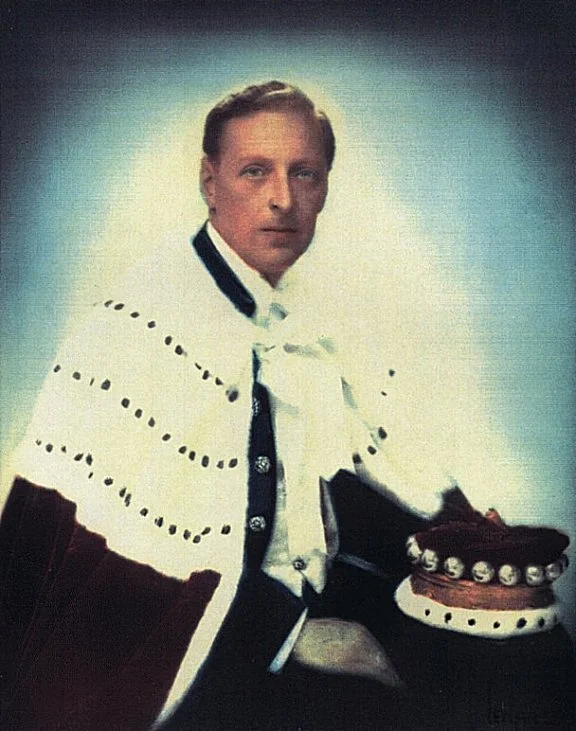
Pownoll Pellew, later 9th Viscount Exmouth, Allan Gaspar and Robert Wilcoxon had a vision of producing a low cost sports car – “a fast little lady” in the jargon of the time. In true amateur spirit the funds were provided by Pellew’s mother and his girlfriend, the actress K Walsh, who was later to marry David Lean. Gaspar's father was a bank manager who provided further funding and funding was completed by a contribution from Robert Wilcoxon, whose brother was also a successful actor and a close associate of Cecil B DeMille. In typical 30s fashion the two brothers were known as “Biff and Bang” for their fighting skills.
The first cars that they produced were hand-made and constructed using an 832cc engine made by the Triumph Motor Company and a chassis built by Rubery Owen. Unfortunately, the top speed was only 70mph - too slow for racing, so later versions utilised a larger engine made by Coventry Climax which took it up to 85mph. Nevertheless, the car raced at Brooklands and Monte Carlo with some success but never managed to win any laurels.
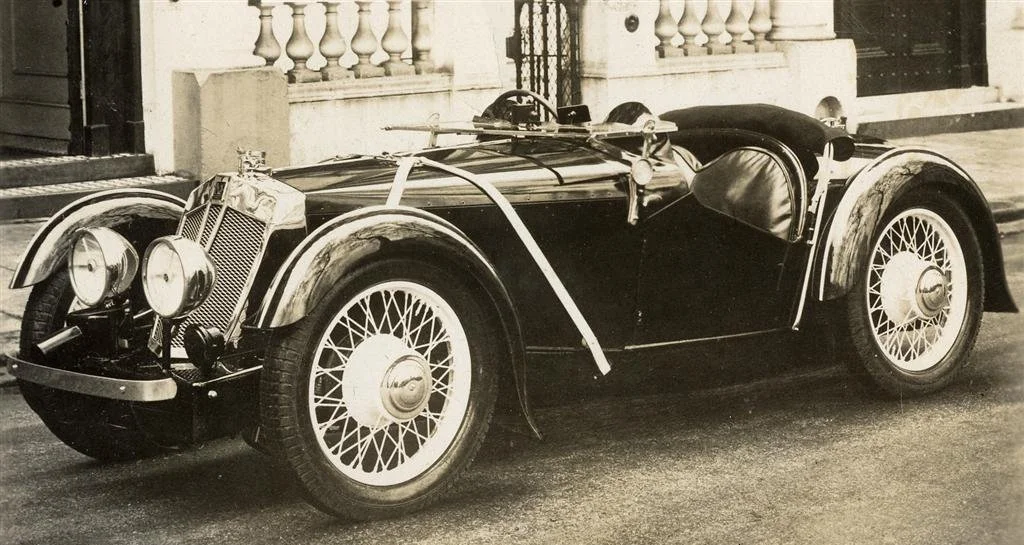
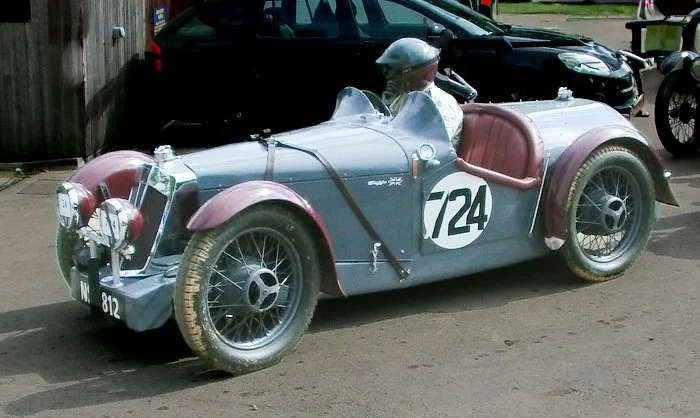
Most of the cars were two seaters but a four-seater version was later made available. In total about 100 cars were made of which at least half a dozen survive today. In 2019 one was advertised for sale at a price of about £30,000

The company lasted a little more than two years. It never managed to develop beyond a gentleman's hobby. There were never the economies of scale derived from full-scale production and the low production and lack of sales led to its demise.
Advertised as “a hand-made car at mass production price” the cars were relatively inexpensive, at about £200 pounds compared to an Austin 7 saloon costing £135 and a top-quality Ford for about £250. Nonetheless, during 1934 the price of the car fell and by October a £200 version was being advertised at £140. By 1935 the company had been sold on and by 1937 it had disappeared altogether.

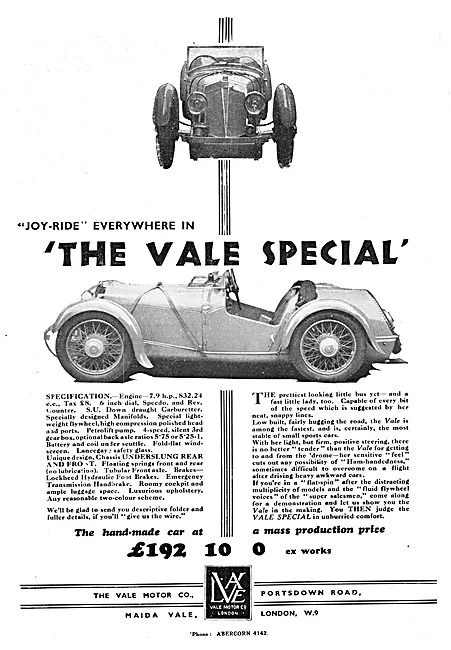
The Vale years were the highlight of the original three founders’ careers. Pownoll Pellew became 9th Viscount Exmouth and had an undistinguished career in the House of Lords, dying aged 62 in 1970. Robert “Bang” Wilcox was killed rescuing soldiers from Dunkirk in 1940 and Allan Gaspar became chief accountant for Decca and as late as the 1950s raised a pugnacious defence of his car against its detractors. In a letter to Motor magazine, which I think can act as an epithet for this very gallant, yet fated endeavour, he wrote:
“I just happen to be a co-designer and producer of the little car. They were first-rate high-speed touring cars. The Vale was a praiseworthy attempt to produce a sports car at a low price and with none of the drawbacks of the specialist-bodied versions of popular chassis. Who the hell is he anyway and what are his qualifications that he sets himself up as an arbiter of fashion, technical history, and smug castigator of other people’s efforts?”
The Rich History of Maida Vale and Warwick Avenue Tube Stations: A Glimpse into the Past
By Julian Futter
In the heart of London, nestled within the famous Bakerloo line, two iconic stations—Maida Vale and Warwick Avenue—hold fascinating histories that stretch back over a century. From being among the first stations staffed entirely by women to their unique architectural features, these stations offer a window into a pivotal time during the First World War and the development of London’s Underground. Both stations have been decisive in the development of Maida Vale and Little Venice.
Maida Vale Station: A Legacy of Design and Innovation
Opened in June 1915, Maida Vale station is not just another stop on the Bakerloo line. Its design closely follows the work of Leslie Green, the renowned architect behind many iconic stations across London. Born and raised in Maida Vale, Green died before he could see the completion of his local station.

One of Maida Vale's standout features is its design, which broke from earlier stations by incorporating escalators instead of lifts. The lack of a requirement for lift machinery enabled the station to be constructed on one floor, a significant innovation at the time. The stunning red terracotta exterior (sang de boeuf), adorned with Tiffany-style lamps and original iron lamp brackets, gives Maida Vale a timeless appeal.
Maida Vale Station shares with Swiss Cottage the distinction of being one of the few stations to be named after a Pub.
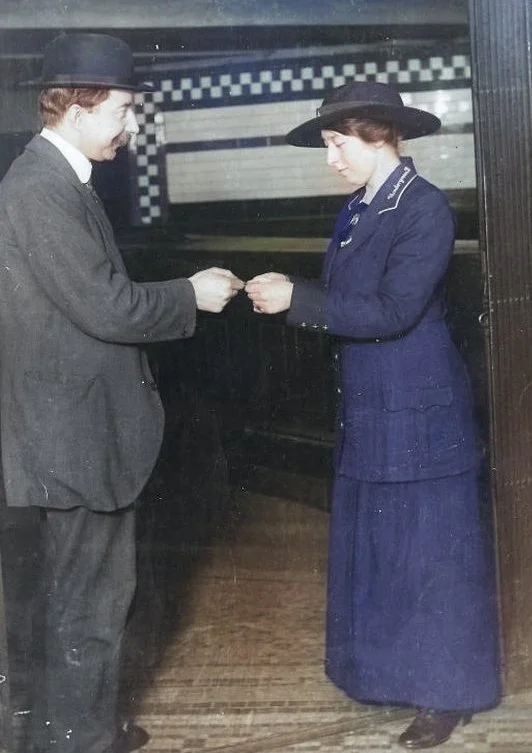
During the tumult of World War I, when many men enlisted, Maida Vale station became one of the first to be entirely staffed by women. This marked a significant moment in both the station’s history and in the role of women in the workforce. Although this staffing arrangement ended in 1919, it represented a major step in the fight to open up the labour market to women.
In 1987 the station was grade II listed and in 2008 the station was sensitively restored.
A Closer Look: The Ticket Hall and Mosaic Roundels
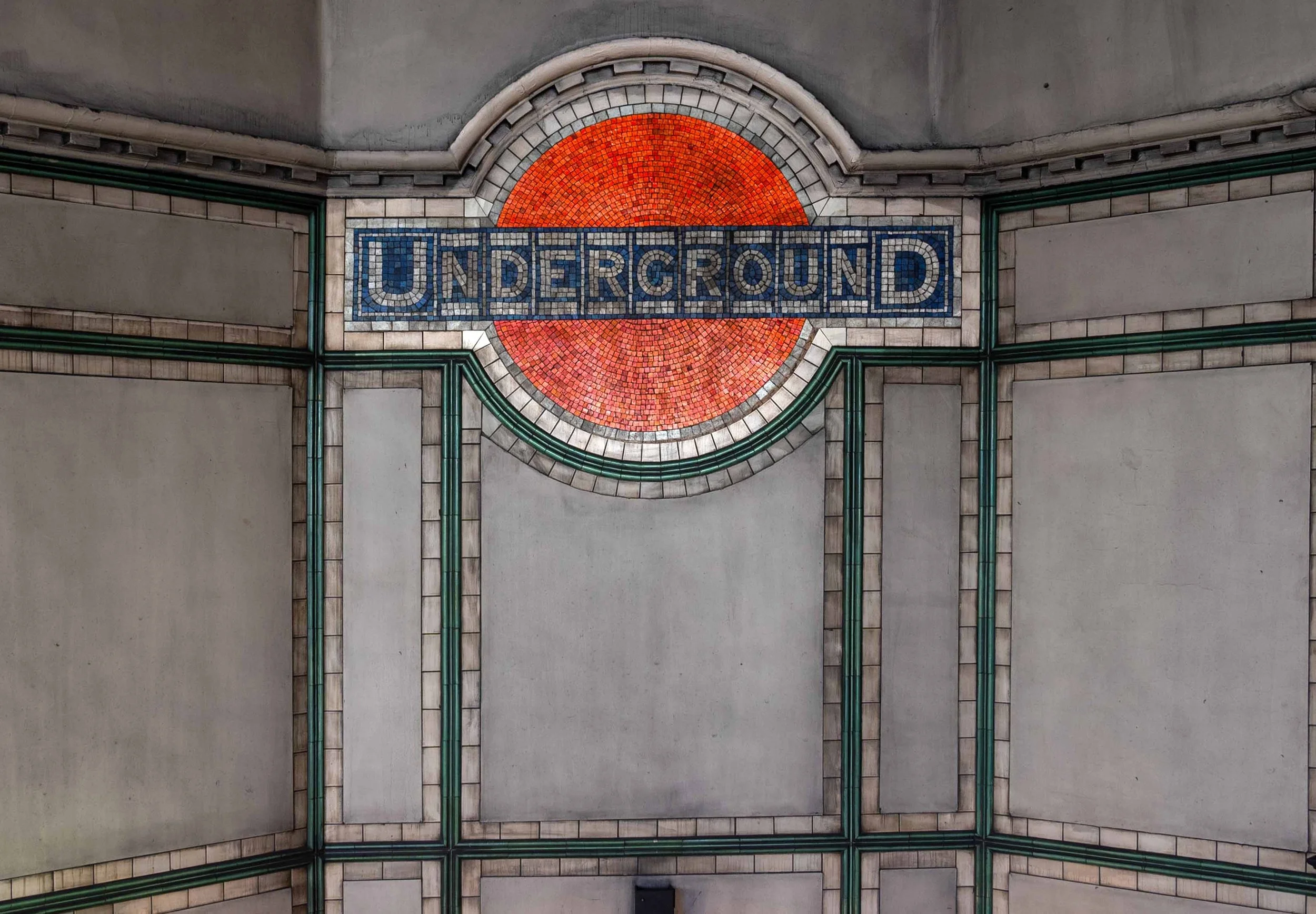
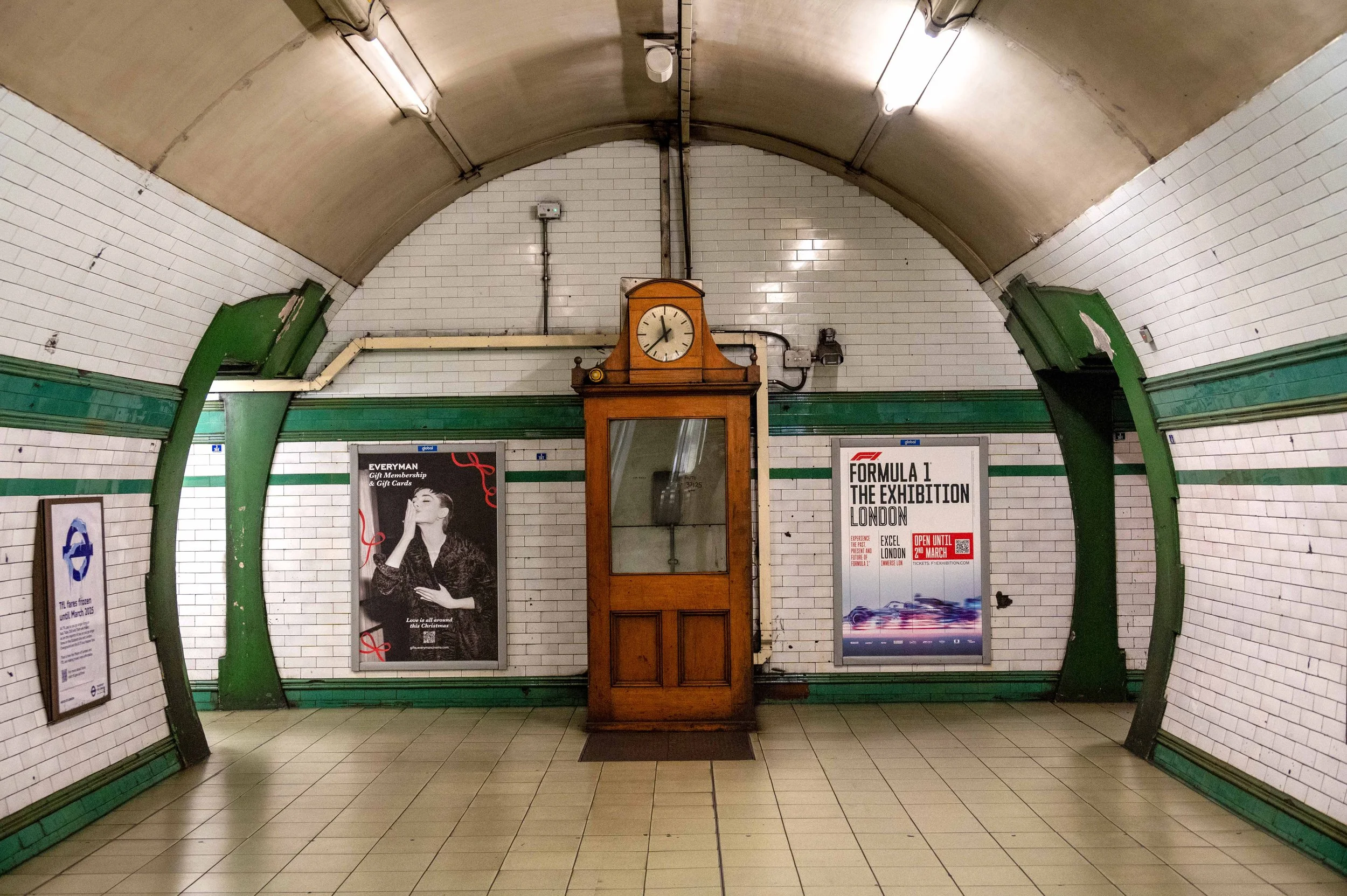
Inside the station is its distinctive ticket hall, which features a rare, contemporary mosaic roundel—one of the few of its kind still surviving today. The clock at the base of the stairs is another charming feature that has been preserved throughout the station’s long history. The huge steel doors at the platform entrance are intriguing, leaving visitors to wonder about their purpose—there is no flood danger so perhaps they are a reminder to the station’s wartime past when it was used a bomb shelter.
Maida Vale’s distinctive features haven’t just been appreciated by commuters—they’ve caught the eye of filmmakers too. Alfred Hitchcock’s film Downhill (1927) starring Ivor Novello and Stephen Poliakoff’s Runners (1982) both of which featured the station’s entrance and staircases. In 2014, it was even rebranded as “Westbourne Oak” for the popular Paddington film.
Warwick Avenue Station: A New Station for a Changing Time
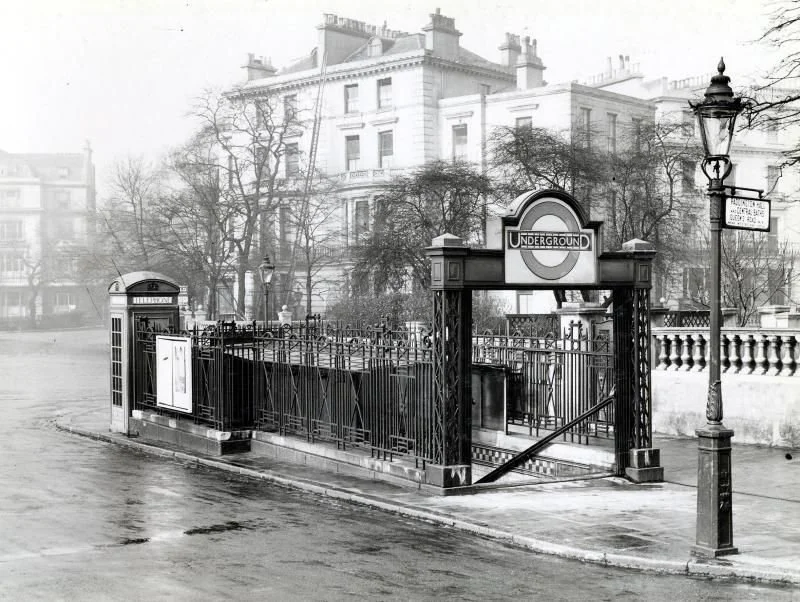
Just a short distance from Maida Vale, Warwick Avenue Station also has its own intriguing history. Initially intended to be named Warrington Crescent, it officially opened its doors on January 31, 1915, under its current name. Warwick Avenue, despite being smaller than Maida Vale, shares a similarly rich connection to the First World War and early 20th-century London.
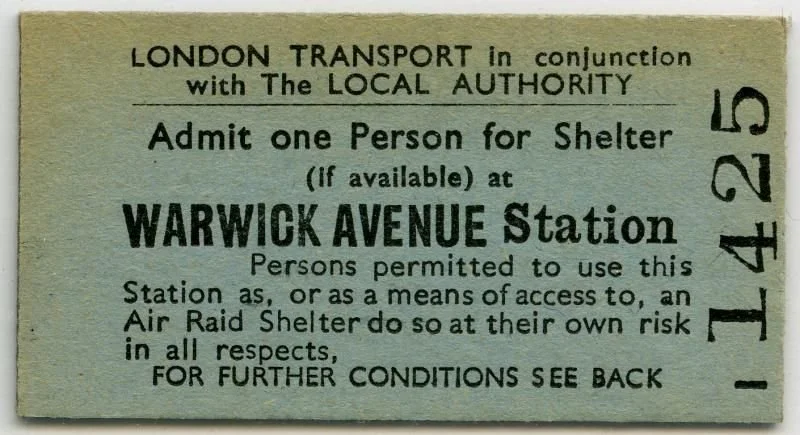
During the two World wars both stations were used as Air Raid shelters with Warwick Avenue having capacity for 2000 people and Maida Vale for 1000.
As the gateway to Little Venice, Warwick Avenue is the only station roundel to have text “(For Little Venice)” incorporated in it as well as its station name.
Warwick Avenue is also one of the few Tube stations to be immortalized in song. Duffy’s 2008 hit, "Warwick Avenue," brought the station into the spotlight, making it for a while our own Abbey Road for Duffy fans.
For hungry passengers there is also a cabmen’s shelter by the exit where they can get a good cup of tea and a bacon sandwich. It is one of only13 surviving examples, built in 1888 and Grade 11 listed.
The Bakerloo Line: The Oldest Trains on the Underground
Opened in 1905, the Bakerloo line is one of the oldest lines in the Underground system. The trains on the Bakerloo line, including those serving Warwick Avenue and Maida Vale, are among the oldest still in operation today, with many having been in service for over 50 years. The Mayor, Sir Sadiq Khan, is reported to have asked the Chancellor, Rachel Reeves, for long term funding to allow for the purchase of new stock by 2030.
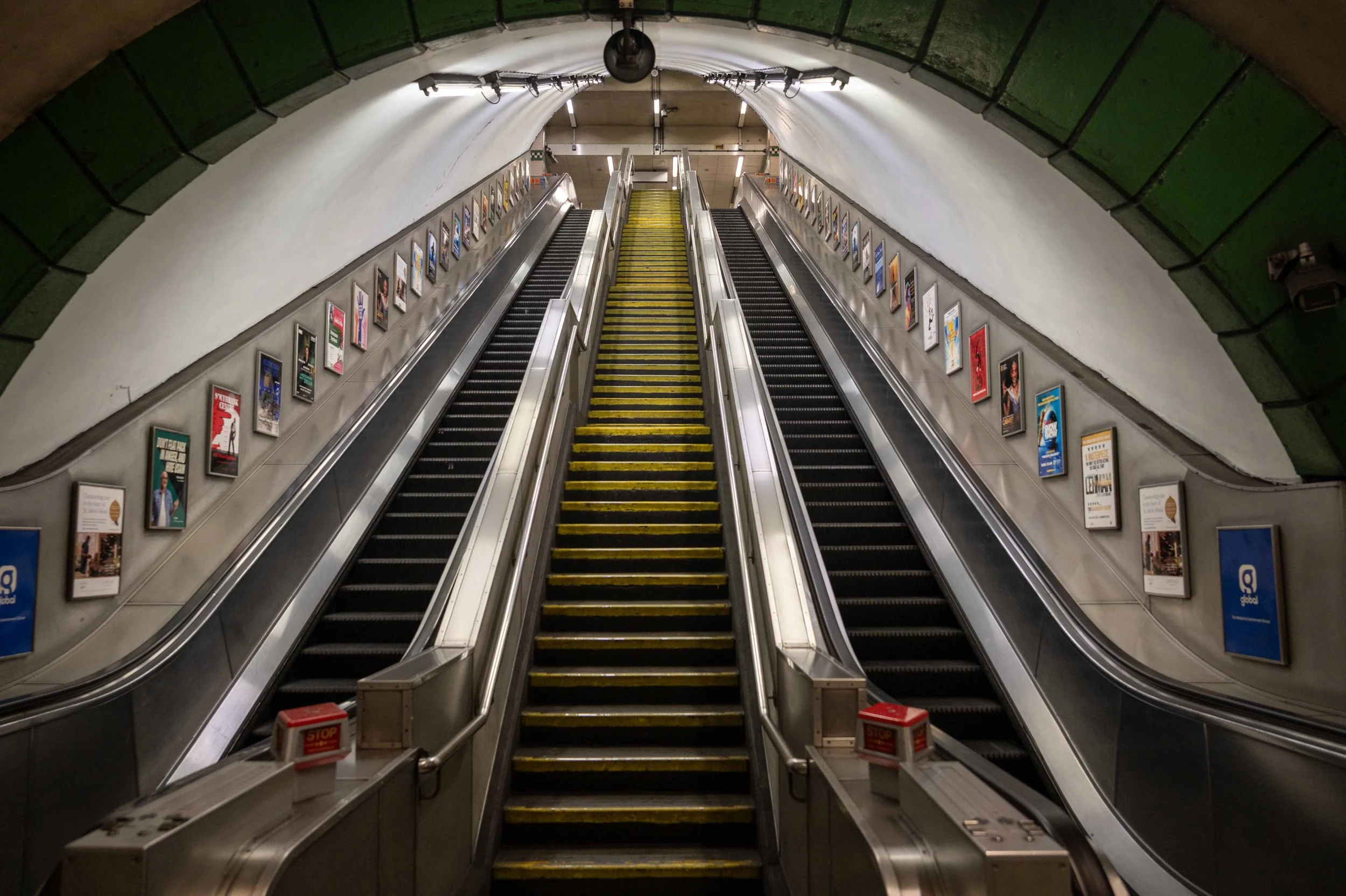
Both stations continue to be central to the rail network. In 2023, Maida Vale saw 2.5 million journeys, while Warwick Avenue reached 3 million. These numbers reflect the ongoing importance of both stations in London’s transport network, as well as their continued place in our area’s vibrant life.
From their architectural beauty to their connection to significant historical events, Maida Vale and Warwick Avenue stations are more than just stops on the Bakerloo line—they are living pieces of London’s past. Whether a local commuter or a visitor discovering the city’s hidden gems, a journey through these stations offers a glimpse into the rich and diverse history that makes London so unique.
32 CLARENDON GARDENS - A MAIDA VALE MYSTERY
By Julian Futter
Looking at the tidy houses in Clarendon Crescent, between Blomfield Rd and Clifton Rd, it is hard to imagine the scene on the 26th of September 1884 when a young servant girl found a large brown parcel in the garden of number 32 Clarendon Gardens. Suspecting that this was not the 1880s equivalent of an Amazon delivery, she immediately called the police. On opening the parcel, the police discovered the body of a fair haired girl aged between about 8 and 10 years old who had apparently been dead for about three or four days.
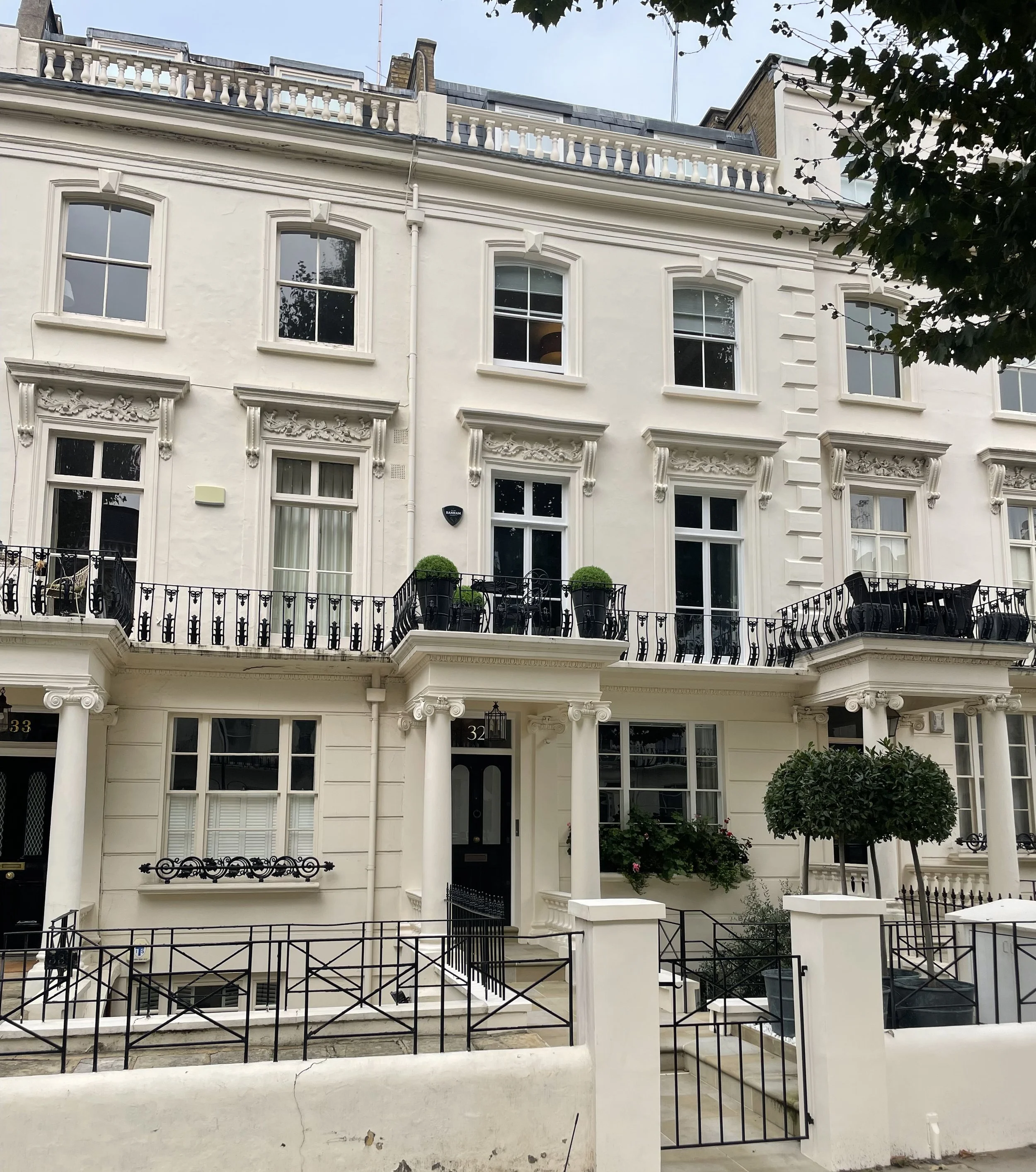
The body was naked and partially wrapped with a rough cotton cloth as was typically used for holding the stuffing in in a mattress. The cloth had no identifying marks and yielded no clues as to its origin, allowing no identification to be established.
A Coroner’s inquest was ordered to establish the cause and manner of the poor girl’s death. No one had come forward to identify the girl neither had anyone reported her missing. In the absence of any firm knowledge of her circumstances or background Press speculation ran wild and reports at first suggested that she had been the victim of “one of those outrages which are so frequent in our criminal records and are consequently followed by murder” or alternatively that the child had been starved to death.
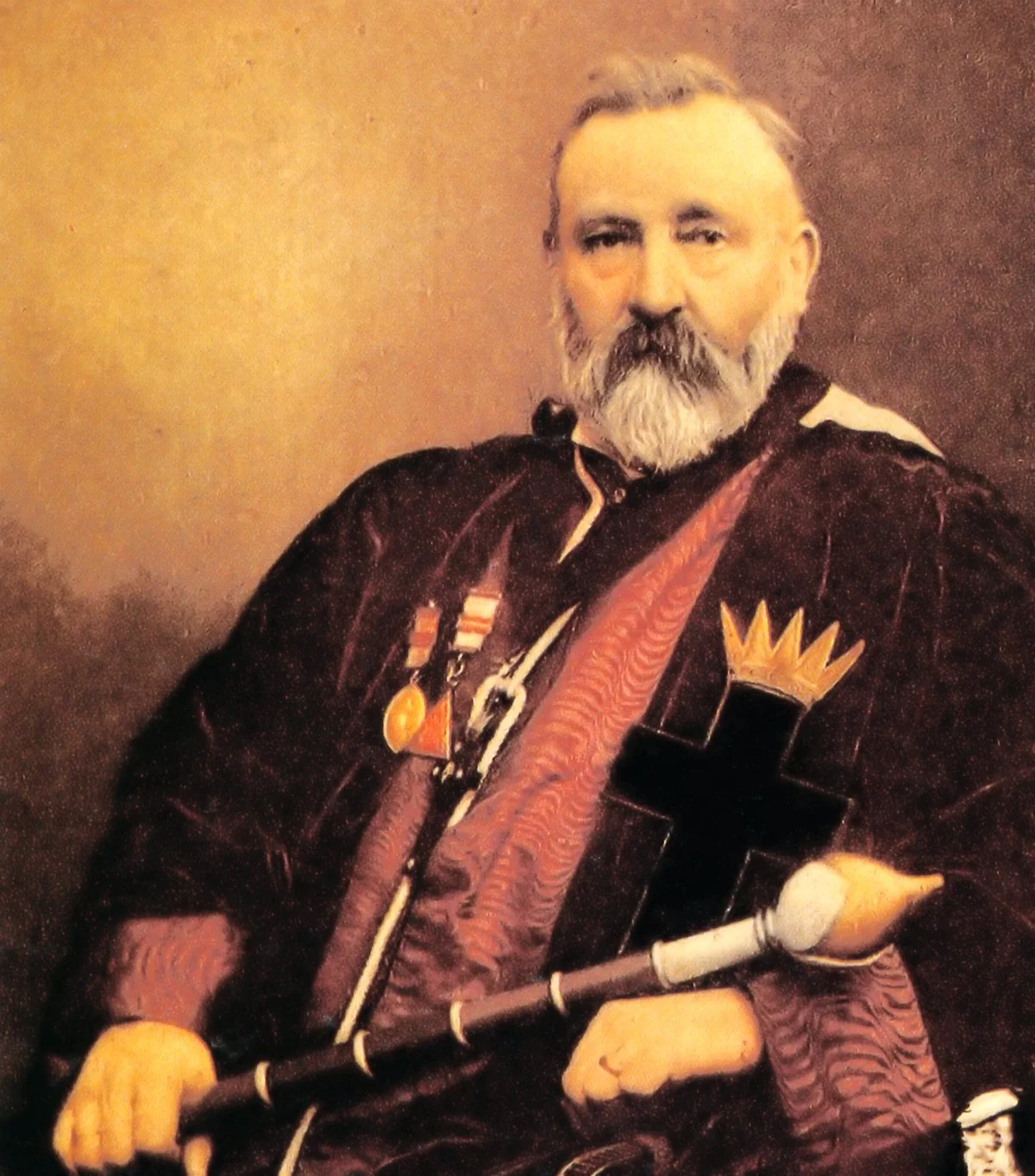
Dr W.W Westcott
Matters were not helped by the fact that the private life of the Coroner, Dr W.W. Westcott was, to put it mildly, far from normal. He was a founder and Supreme Magus of an occult organisation known as the Order of the Golden Dawn. Among its members was the notorious Satanist, Aleister Crowley referred to by John Bull as the “wickedest man in the world”. In later years he was suspected by the writer Jack London to have been the killer known as Jack the Ripper. Two of his children killed themselves and his wife died falling out of a window.
His career as a coroner almost came to premature end when he left documents referring to his magical powers in a taxi. These were then forwarded to the Home Office and he was severely admonished and told that he “was paid to sit on corpses and not to raise them”.
Rumours of starvation were dashed when the post mortem showed that although she had not eaten during the past 24 hours, her body was still well nourished and according to the press “Experience shows that while a child in London may sometimes be most brutally treated, and even slowly murdered, without public interference, it cannot be starved without the neighbouring women discovering its condition, and raising loud, sometimes very courageous and self-denying protests. Children are neglected, or maltreated hideously, but seldom deliberately starved.”
So, who was the girl and how did she die? The surgeon 's conclusion was that she had died from congestion of the lungs aggravated by heart condition. Dr Westcott seemed very doubtful but the jury concluded that violence would have left some mark and that starvation would have left her emaciated so they found a verdict of death from natural causes.
So, if she died of natural causes why was abandoned in a garden in Maida Vale?
Had she been abducted and consequently died? Had she been the recipient of a small annuity or pension and her death hidden to allow payments to continue? Such a crime was not unknown in the 19th century. Was she perhaps poisoned by means that did not show up in her post mortem examination?
Sadly, we will never know exactly what happened to this unfortunate child.
In conclusion, this tragic story shows us a society where a child, either murdered or who conceivably died of natural causes, was treated as a piece of garbage by persons whom the authorities had no means of discovering, even with the amount of press coverage that this incident generated.
It is significant that only two months after this awful incident the forerunner of the NSPCC was founded and that in the following year Parliament passed the first Act to protect and prevent cruelty to children. This was of course too late to help the poor girl in our story.